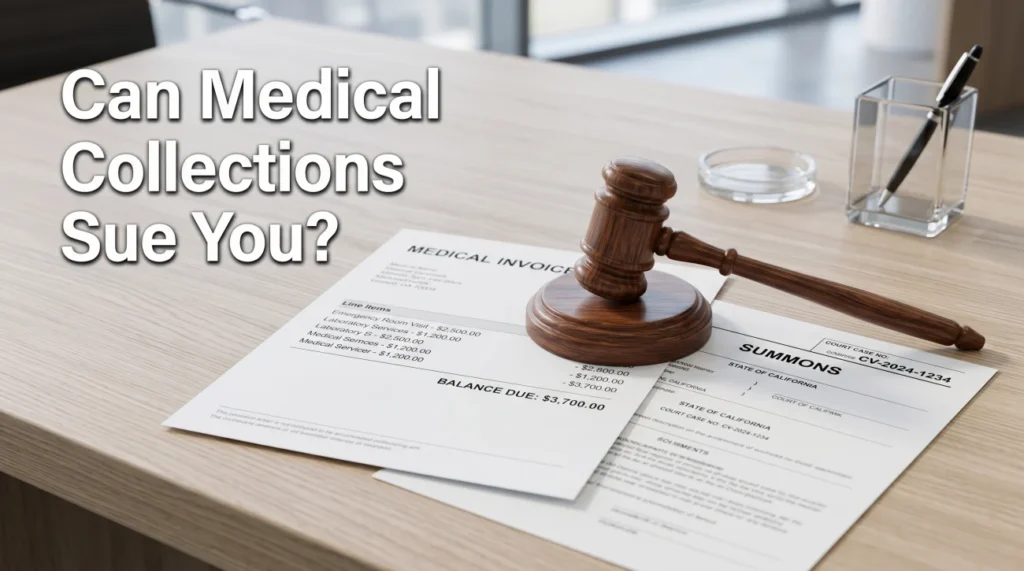
- Medical debt collectors can legally sue you, but they must complete a formal court process before they can take any of your money.
- Lawsuits cost collectors time and money. Because of this, they typically only litigate larger balances that have a high probability of recovery.
- The most dangerous mistake you can make is ignoring a court summons. Doing so usually results in a default judgment against you.
- Even after a lawsuit has been filed, you still have options to negotiate and settle the debt before wage garnishment begins.
The Reality Behind Threats of Legal Action
Opening a letter that threatens a medical collections lawsuit is a terrifying experience. The language is intentionally urgent. It implies that unless you pay immediately, your bank accounts will be frozen and your wages will be taken. If you are reading this, you are likely wondering if they can actually do that to you.
The short answer to whether can medical collections sue you is yes. However, the process is far more complicated, expensive, and time-consuming for the collector than their warning letters suggest. There is no automatic button a debt collector can press to seize your paycheck.
During my time working alongside hospital billing and collections departments, I watched how the decision to litigate was actually made. It was never personal. It was purely mathematical. Understanding the economics of a medical debt lawsuit, the steps they must legally take, and the points where you have leverage will help you determine if the threat you are facing is real or just a scare tactic.
The Economics: Why Collectors Do Not Sue Everyone
Can a collection agency sue for medical bills regardless of the amount? Technically, yes. Practically, they do not. Filing a lawsuit requires a collector to pay filing fees, hire local legal counsel, and pay process servers to deliver the documents. This overhead dictates which accounts get sued and which simply receive endless phone calls.
Collectors evaluate the cost of pursuit against the likelihood of recovery. Here is what makes an account likely to face litigation:
- 📌 Balance size: Accounts under five hundred dollars are almost never litigated because the legal costs eat up the entire potential profit. Lawsuits are far more common for balances over two thousand dollars.
- 📌 Account age: Recent debts with clear, original hospital documentation are easier to prove in court. Older accounts that have been resold multiple times often lack the paperwork needed to win a contested hearing.
- 📌 Verifiable assets: Collectors often run soft credit checks to see if you have open credit lines, a mortgage, or steady employment. They are more likely to sue if they believe you actually have wages or assets they can ultimately garnish.
If your account is old, relatively small, and has been passed between three different collection agencies, the threat of a lawsuit is incredibly low. Conversely, if you owe ten thousand dollars from a recent surgery and have a steady income, the risk is much higher.
What Actually Has to Happen Before They Take Your Money
To understand how can medical debt go to court, you must understand the strict procedural steps collectors must follow. They cannot simply skip to the end and take your money. If you want to know what federal laws govern their behavior leading up to this point, you should review the full scope of medical debt collection laws.
Step 1: Filing and Service
The collector must file a formal complaint in your local civil court. Once filed, they must legally serve you with the summons. This usually means a process server handing you the documents or, in some jurisdictions, sending them via certified mail.
Step 2: The Response Window
After you are served, you have a specific window of time to file a formal written response with the court. This deadline is typically twenty to thirty days, depending on your state. This is the most critical window in the entire process.
Step 3: The Hearing and Judgment
If you respond, the court will schedule a hearing where the collector must prove you owe the exact amount claimed. If the judge agrees with the collector, they will issue a court judgment against you.
Step 4: The Court Order for Enforcement
Even with a judgment, the collector cannot automatically reach into your bank account. They must return to the court to obtain a specific writ of garnishment or levy. This final court order is what legally compels your employer or bank to hand over your money.
Receiving a court summons, feeling overwhelmed, and throwing it in a drawer hoping the collector will drop the case.
Reading the summons carefully, noting the exact deadline to file an answer, and consulting a legal professional to draft a response before the time expires.
The Trap of the Default Judgment
The biggest secret in the debt collection industry is that collectors rarely want to go to trial. They rely on the fact that the vast majority of consumers simply do not respond to a summons. When you fail to file an answer with the court, the judge grants an automatic default judgment in favor of the collector.
A default judgment means the collector wins by forfeit. They do not have to prove their math. They do not have to produce the original hospital billing records. They simply get the legal authority to collect the debt.
⚠️ Warning: Most medical debt judgments are default judgments. By choosing to ignore the lawsuit, you hand the collector exactly what they need to freeze your bank account or garnish your paycheck.
Even if you know you owe the money, filing a response forces the collector to prove their case and buys you valuable time to negotiate a settlement or review your options regarding what debt collectors are actually allowed to do.
Finding a Resolution Before and After a Lawsuit
Can you be sued for medical debt and still find a way out? Yes. The filing of a lawsuit is a negotiation tactic just as much as it is a legal procedure. From the moment the suit is filed up until a judge bangs the gavel, settlement is often on the table.
Collectors know that trials are unpredictable and costly. If you or your attorney reach out to negotiate after being served, many debt buyers will gladly accept a lump sum payment or a structured payment plan rather than risking a judge throwing their case out over incomplete paperwork. If you are considering this route, you need to understand how to settle medical debt in collections effectively.
If a judgment has already been entered against you, the collector’s leverage increases dramatically. At this stage, they can apply for court orders to seize funds. In forty-five states, medical debt collectors can garnish your wages once they have this judgment in hand. However, even post-judgment, collectors prefer cash in hand over the administrative headache of enforcing a garnishment. You can still offer a settlement, though the discount will be much smaller than if you had negotiated earlier.
Recognizing the Signs of True Legal Escalation
Throughout this entire escalation process, collection agencies rely heavily on the fear of legal action to motivate payment. It is important to distinguish between a collector using legal terminology to scare you and a collector who has actually initiated a lawsuit.
You might receive letters stating that your account is “slated for attorney review” or that they “may pursue medical debt legal action.” These phrases are designed to make you panic. While they indicate that your account is moving through their internal escalation process, they do not mean a lawsuit has been filed.
“From the inside of the collections pipeline, I saw thousands of letters generated automatically with phrases like ‘pending legal review.’ In reality, only a tiny fraction of those accounts were ever sent to a real attorney. The language was simply a tool to prompt a phone call from the patient.”
A true lawsuit only begins when you receive formal documents from a court indicating that a collector has filed a suit against you, or when you find official court notices in the mail. If you are only receiving phone calls and letters from an agency, they are trying to convince you that paying them is easier than dealing with a judge.
Final Thoughts: Protect Your Position
Medical debt collectors use the legal system as a tool for intimidation, but they must play by its strict rules. Collectors target accounts that are profitable to pursue and consumers who are unlikely to fight back. Knowing the mechanics behind the threat gives you the power to assess your actual risk.
⚠️ Immediate Action Step: If you have received a court summons, the clock is ticking on your response window. Do not ignore it. Additionally, if the collector’s behavior seems deceptive, or if they are threatening legal action on an account that involves protected health information, their tactics may be illegal. Consult a debt defense attorney immediately and learn how to evaluate your situation for a medical debt collection HIPAA violation.
Exploring Your Specific Medical Debt Questions
Understanding the lawsuit process is only one part of dealing with a medical collection account. Depending on your exact situation, you likely have more immediate questions about your wages, your legal obligations, and how long you have to deal with the collector. I have broken down these specific scenarios below:
| Situation | What You Need to Know |
|---|---|
| Wage Garnishment | Can Medical Debt Collectors Garnish Your Wages? State rules, federal caps, and the 5 states where it’s banned. |
| Legal Obligation | Do You Have to Pay Medical Debt in Collections? The legal answer and the real consequences of not paying. |
| Payment Strategy | Should I Pay Medical Debt in Collections? The 5-factor framework for making the right call. |
| Collection Timeline | How Long Does Medical Debt Stay in Collections? The two separate timelines most people confuse. |
| Active Lawsuit | How to Settle a Medical Debt Collection Lawsuit: Negotiating a resolution before judgment is entered. |
| Property Risk | Can Medical Debt Take Your House? The lien process, homestead exemptions, and foreclosure reality. |
| Closing the Account | How to Remove Medical Debt From Collections: The five paths that actually resolve the account. |
❓ FAQ
⚖️ Can a collection agency sue for medical bills under $500?
Technically yes, but practically it is very rare. The legal fees and court costs required to file a lawsuit usually exceed the value of a five hundred dollar debt, making it unprofitable for the collector.
📬 How will I know if a medical debt collector is actually suing me?
You will receive an official court summons and complaint, typically delivered by a process server or via certified mail. Letters from the agency threatening legal action are not actual lawsuits.
⏰ What happens if I ignore a medical debt lawsuit summons?
If you fail to file a written response with the court by the deadline, the judge will issue an automatic default judgment against you, granting the collector the legal right to pursue wage garnishment or bank levies.
💼 Can medical debt collectors take money from my paycheck?
Yes, but only after they have successfully sued you and obtained a court judgment. They cannot legally garnish your wages simply by sending a collection letter.
🤝 Can I settle a medical debt after a lawsuit has been filed?
Yes. Settlement negotiations can happen at any point before the judge issues a final ruling. Collectors are often willing to settle to avoid the unpredictability and cost of a trial.
📅 Does medical debt have a time limit for lawsuits?
Yes. Every state has a statute of limitations for debt collection lawsuits, typically ranging from three to six years. Once this time window passes, the collector loses the legal right to sue you.
🏥 Can the original hospital sue me directly?
Yes, the hospital can sue you directly, though most prefer to assign or sell delinquent accounts to third-party collection agencies who then handle the litigation process.
🏠 Can a medical debt lawsuit put a lien on my house?
If a collector wins a judgment against you, they can often place a lien on your property. However, forcing the actual foreclosure and sale of a primary residence for medical debt is extremely rare.
🛡️ Do I need an attorney if I am sued for medical debt?
While you can represent yourself, consulting with a consumer debt defense attorney is highly recommended to ensure you file a proper response and identify any legal violations made by the collector.
🛑 Can a collector threaten to sue me if the debt is too old?
No. Federal consumer protection law prohibits collectors from threatening a lawsuit on a debt that is past the state’s statute of limitations.
Medical Debt Collection
The laws governing what collectors can do and the specific situations where those laws matter most.
- The full legal framework: five federal laws governing what collectors can and cannot do
- Is It Illegal to Send Medical Debt to Collections? The Conditions That Make It Unlawful
- How to Remove Medical Debt From Collections: What Actually Resolves the Account
- What to Say to Medical Debt Collectors: The Exact Phrases That Change the Conversation
- Can Medical Debt Collectors Charge Interest? The Rule Most Patients Don’t Know
When the Collector Won't Stop
Knowing your rights matters. These cover what to do when the collector does not back down.
- How to use a HIPAA violation to push back on the collector that is pursuing you
- Negotiating the original bill before the collector gains more leverage over the account
- What collectors in this situation will actually accept and why the math works for both sides
- Whether a structured relief program makes sense when a collector is already involved
- Removing the collection account from your credit report after the account is resolved
Disclosure: The content on this site reflects direct experience inside hospital billing and medical debt collection, and is grounded in federal law and regulation. It is informational in nature. Reading it does not constitute legal advice and does not create any professional relationship. If you are facing a lawsuit, a judgment, or a legal deadline, consult a licensed attorney in your state before taking action.