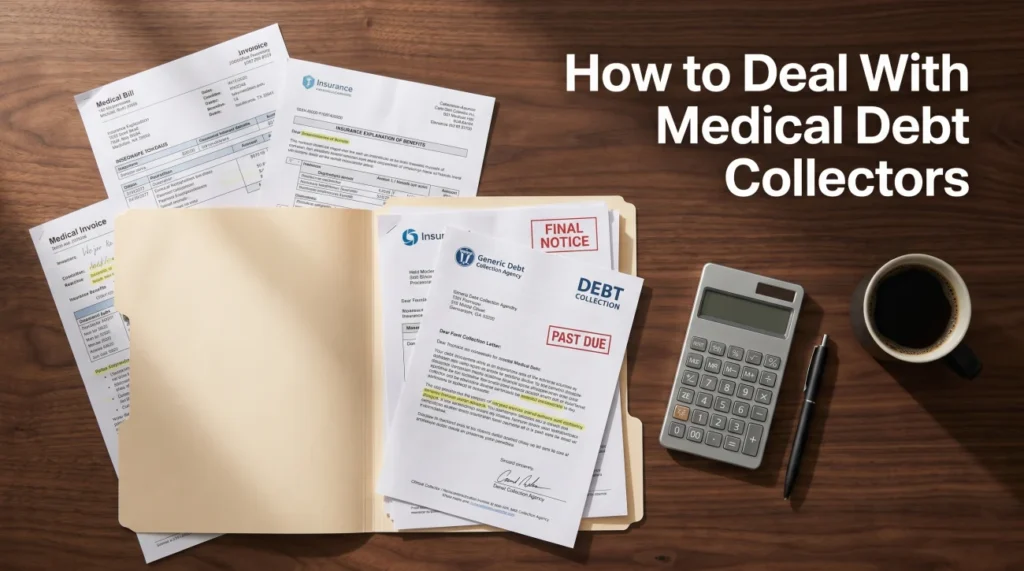
- Collectors prioritize accounts based on a scoring system, not personal vendettas. How you respond directly affects how aggressively they pursue you.
- The two worst strategies are ignoring the contact completely (which invites legal escalation) or arguing emotionally on the phone (which generates evidence against you).
- You must tailor your strategy based on whether the debt is inaccurate, valid but unaffordable, or crossing the line into harassment.
The Reality of the Collection Pipeline
When I worked inside hospital billing departments, I routinely saw the exact moment an account was packaged up and shipped out to a collection agency. For the patient, receiving that first phone call feels deeply personal and highly alarming. But from the inside of the system, it is purely a mathematical process.
If you are trying to figure out how to deal with medical debt collectors, the very first thing you need to drop is the idea that they are judging you. They are not. They are working a massive portfolio of accounts, and your account is simply a row on a spreadsheet with a specific “likelihood of payment” score attached to it.
Every time you interact with them, or choose not to interact with them, you are altering that score. Understanding this mechanic is the only way to build a medical debt collector strategy that actually protects you. You do not need to be a legal expert to handle this, but you do need to understand what the agency is trying to accomplish so you can make your account a low-priority problem for them.
The Portfolio Scoring Strategy
The best way to handle medical bill collectors is to understand how they decide who to call. Agencies buy or are assigned thousands of accounts at once. They do not have the manpower to call everyone every day. Instead, their software scores your account based on your balance size, the age of the debt, your recent credit activity, and your responsiveness.
“When I reviewed accounts that agencies sent back to the hospital as ‘uncollectable,’ a clear pattern emerged. The accounts that got dropped were rarely the ones where patients argued aggressively. They were the accounts where patients strictly requested all communication in writing and forced the agency to provide rigorous documentation.”
Because their system relies on this scoring metric, there are two common approaches that patients take which almost always backfire.
Many people assume that if they never pick up the phone, the agency will eventually give up. While this sometimes works for tiny balances, ignoring a significant medical bill usually moves your file into the “escalation” queue. To a collector’s algorithm, silence often means you have assets but simply do not want to engage, making you a prime target for a lawsuit.
When you respond by sending a certified letter requesting validation and demanding all future contact be in writing, you force the collector off their script. You move from the automated dialer system into a manual review process, which costs them time and money.
Another terrible strategy is engaging defensively on the phone. When medical debt collectors calling you manage to get you on the line, their goal is to get you talking. Even if you are just explaining why the bill is unfair or why your insurance should have paid it, the collector is taking notes. They are documenting that you acknowledge the debt exists. Do not give them free evidence.
The Three Distinct Situations (And How to Handle Each)
Dealing with medical collection agencies is not a one-size-fits-all process. Your exact response depends entirely on which of the following three lanes your account falls into.
Situation A: The Debt is Disputed or Incorrect
Medical billing is notoriously error-prone. If you believe the amount is wrong, your insurance was not properly billed, or you simply do not recognize the charges, your strategy is validation and dispute. You must not pay a single cent while you are disputing the bill, as a partial payment can legally be viewed as acknowledging the full balance.
Your action step here is to send a formal debt validation letter within the first 30 days of them contacting you. If they call you before you can mail the letter, you need to know the exact phrases to use to shut the conversation down safely without making any accidental admissions.
Situation B: The Debt is Valid, But You Cannot Pay
If the hospital billed you correctly, the insurance processed it correctly, and you simply do not have the money, your strategy shifts to damage control and negotiation. In this scenario, you are trying to resolve the account before the collector decides it is worth taking you to court.
Before you make any offer, you must take two crucial action steps. First, confirm who actually owns the account. If the agency is just collecting on behalf of the hospital (assigned debt), the hospital still controls the bottom line. If the debt was sold outright to a debt buyer for pennies on the dollar, you have significantly more leverage because their cost basis is so low. Second, never explicitly admit liability when proposing a settlement. Always frame it as an attempt to “resolve the account.”
Once you know who you are dealing with and what leverage you hold, you need to explore how settlements are typically structured so you can offer a lump sum that makes mathematical sense for the agency to accept.
Situation C: The Collector is Crossing Legal Lines
Sometimes, the issue is not the debt itself, but how the agency is behaving. If a collector is threatening you with arrest, calling your employer after you told them not to, using profane language, or calling you at 11:00 PM, you are dealing with harassment.
In this situation, your strategy is exact documentation. You cannot just claim a collector harassed you; you must tie every incident to a specific violation. If they call at 11:00 PM, you need the exact date, time, and caller ID saved. These behaviors violate federal law, and documented violations give you incredible leverage to force the agency to back away. (See the Documentation Folder tip in the Tactics section below for exactly what to record).
To utilize this leverage, you must understand the exact rules under the FDCPA that collectors must follow and precisely where they are stepping out of bounds.
Signs Your Account is Being Escalated
Most patients start looking for advice when the collection tactics shift from annoying to frightening. If you are receiving standard letters once a month, you are in the automated phase of collection. But collectors have specific triggers that move an account from an automated dialer to a dedicated agent, and eventually to a legal review desk.
If you are noticing the frequency of contact increasing sharply, that is your first warning sign. You might start receiving letters printed on attorney letterhead, rather than standard agency stationery. In phone conversations, agents might start casually dropping phrases about “forwarding your file to our legal department” or “recommending this account for further review.”
These are not accidental phrases. They are scripted pressure tests designed to see if the threat of legal action will force a payment. If you are seeing these signs, your window to handle the situation casually has closed.
👉 Next Step: You need to know exactly what has to happen before they can actually take your money. Understanding the difference between a threatened lawsuit and a real one dictates your next move.
Tactics to Protect Yourself During Any Interaction
Regardless of which situation you are in, there are universal rules for how to respond to medical debt collectors that you must strictly observe to protect your financial and legal standing.
First, control the flow of information. Never confirm your Social Security Number to an inbound caller. If a collector calls you and asks you to verify your full SSN before they will tell you what the call is about, refuse. You cannot verify who is on the other end of the line, and scammers routinely pose as medical debt collectors.
⚠️ Warning: Never make a “good faith” partial payment just to get a collector off the phone. In many states, making a partial payment on an old debt will completely restart the statute of limitations, giving the collector years of renewed legal rights to sue you.
Second, take control of the communication medium. Moving all correspondence to physical mail accomplishes two things: it stops the stressful phone calls, and it forces the collector to put every claim and demand on paper, preventing them from making illegal threats they would otherwise only make verbally.
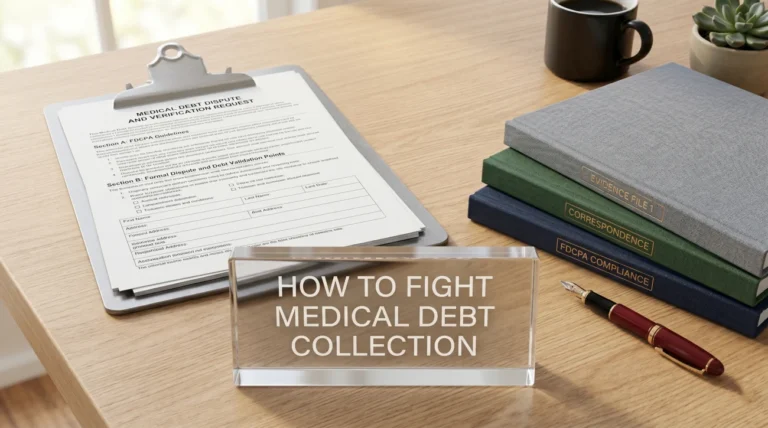
Do not rely on your memory or notes scribbled on scrap paper. Your debt validation and contact log must be organized. It should contain:
- The exact date, time, and duration of every phone call.
- The name or agent ID number of the person calling.
- The specific demands or threats made (written down word-for-word if possible).
- Copies of all letters received, stapled directly to their postmarked envelopes to prove mailing dates.
Finally, recognize that the collection landscape is not static. Your strategy must pivot immediately when these three triggers occur:
- The collector sends a settlement offer: Do not simply pay the first offer out of relief. Review it carefully, ensure it includes clear terms for closing the account, and never send payment until you have the agreement in writing.
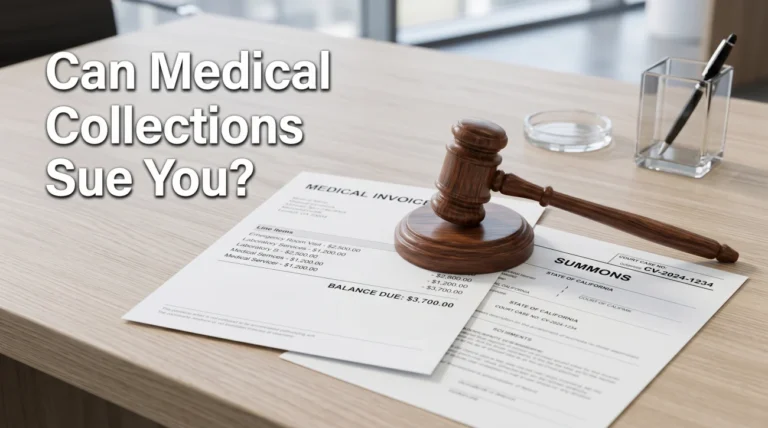
- A lawsuit is filed: The moment you receive a court summons, everything changes. The FDCPA timeline takes a backseat to the court’s response deadline (often 20 to 30 days). Missing this deadline results in an automatic default judgment.
- The debt is sold during an active dispute: This is a highly frustrating loophole. If you send a validation request to Agency A, and they sell the debt to Agency B before validating it, your original request does not automatically apply to the new buyer. You must immediately send a new validation letter to Agency B to pause their collection efforts.
Whenever the situation shifts, go back to your documentation, verify who actually owns the debt, and adjust your strategy based on the comprehensive federal laws that govern medical collections.
Final Thoughts: Removing the Emotion from the Process
Learning how to handle medical debt collectors is ultimately an exercise in boundary setting. The collection industry relies heavily on anxiety, urgency, and the social stigma of unpaid bills to push patients into making rushed financial decisions. By recognizing that this is merely a structured business process, you instantly remove their primary weapon.
Maintain your documentation, refuse to engage in emotional verbal arguments, and map out your next move based on the actual legal status of the debt, not the tone of their letters. Treat it as the procedural transaction that it is.
❓ FAQ
📞 How do I stop a medical debt collector from calling me every day?
You can stop the calls by sending a written “cease communication” letter via certified mail. Under federal law, once they receive this written request, they must stop calling you. They are only allowed to contact you one final time to acknowledge the request or to inform you of specific legal action they are taking.
⏱️ How long can a collection agency legally pursue a hospital bill?
A collector can technically ask you to pay indefinitely, but their ability to sue you is limited by your state’s statute of limitations (typically 3 to 6 years). Separately, the debt can only remain on your credit report for 7 years from the original date of delinquency, regardless of whether it is paid.
🏥 Does the original hospital still own my debt after it goes to collections?
It depends on the arrangement. Sometimes a hospital simply hires an agency to collect on their behalf (assignment), meaning the hospital still owns the debt. In other cases, the hospital sells the account outright to a debt buyer. You can find out by asking the collector in writing who the current legal owner of the debt is.
📝 What happens if I just ignore the collection letters?
Ignoring the letters will not make the debt disappear. While you have no legal obligation to speak with them, ignoring all contact increases the likelihood that the agency will assume you are avoiding payment and escalate the account to a lawsuit or report it to the credit bureaus.
💳 Should I give them my debit card to set up a small payment plan?
Never give a debt collector direct access to your bank account or debit card. If you negotiate a payment plan, get the agreement in writing first, and use a method like a cashier’s check, a prepaid card, or a specific bill-pay push from your bank so they cannot withdraw more than authorized.
⚖️ Can they actually have me arrested for not paying?
No. There is no debtors’ prison for unpaid medical bills in the United States. If a debt collector threatens you with police action, arrest, or jail time, they are committing a severe violation of the Fair Debt Collection Practices Act.
🗣️ Is it better to talk to them on the phone or communicate by mail?
It is almost always better to communicate strictly by mail. Written communication creates a paper trail, prevents you from making accidental verbal admissions, and forces the collector to be careful about making illegal threats that they might otherwise use on a phone call.
🛑 What exactly does it mean to request debt validation?
Requesting validation is formally asking the collector to prove that you owe the money, that the amount is perfectly accurate, and that they have the legal right to collect it. When you request this in writing within 30 days of their first contact, they must pause all collection efforts until they provide the proof.
Medical Debt Collection
The laws governing what collectors can do and the specific situations where those laws matter most.
- The full legal framework: five federal laws governing what collectors can and cannot do
- Should I Pay Medical Debt in Collections? The Strategic Framework
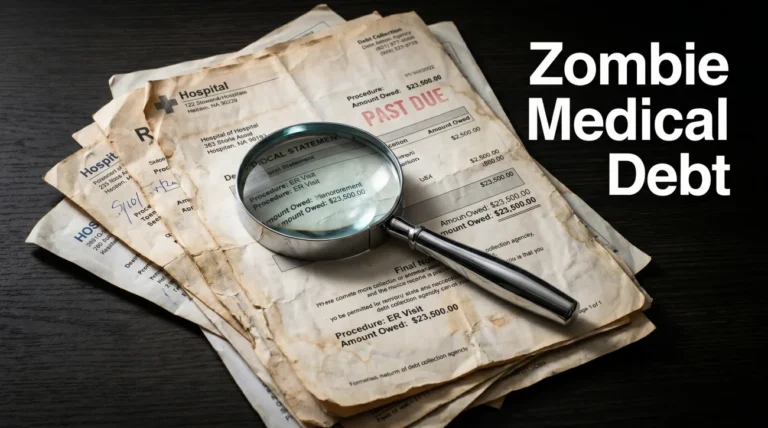
- Zombie Medical Debt: What It Is, How It Comes Back to Life, and How to Stop It
- How to Get Out of Medical Debt Collections: The Four Paths and Which One Fits Your Situation
- Do Collection Agencies Buy Medical Debt? The Market Economics You Need to Know
When the Collector Won't Stop
Knowing your rights matters. These cover what to do when the collector does not back down.
- How to use a HIPAA violation to push back on the collector that is pursuing you
- Negotiating the original bill before the collector gains more leverage over the account
- What collectors in this situation will actually accept and why the math works for both sides
- Whether a structured relief program makes sense when a collector is already involved
- Removing the collection account from your credit report after the account is resolved
Disclosure: The content on this site reflects direct experience inside hospital billing and medical debt collection, and is grounded in federal law and regulation. It is informational in nature. Reading it does not constitute legal advice and does not create any professional relationship. If you are facing a lawsuit, a judgment, or a legal deadline, consult a licensed attorney in your state before taking action.