- Once your account leaves the hospital, you are no longer dealing with a healthcare provider – you are dealing with a business focused entirely on financial recovery.
- There are three distinct types of collectors (assigned agencies, primary buyers, and downstream buyers), and knowing which one is calling you dictates exactly how much leverage you have.
- Ignoring collection notices is the most dangerous move you can make. It does not make the debt disappear; it simply moves your account from the “can be negotiated with” pile into the legal escalation pipeline.
- Federal law gives you a specific window after first contact to demand validation and pause collection activity – knowing how to use it changes everything.
The Shift From Hospital Billing to Debt Collection
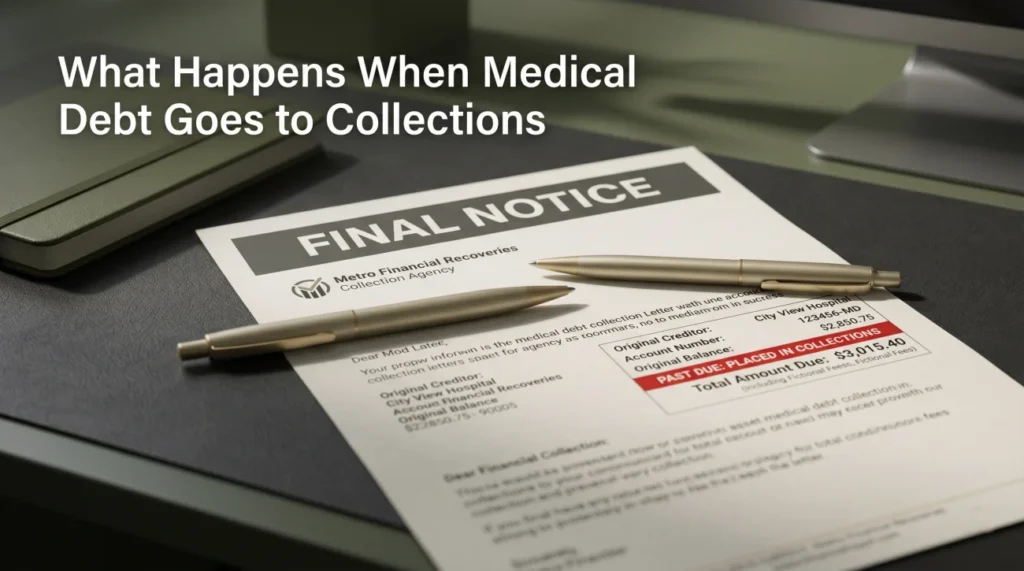
The moment your medical bill goes to a collection agency, the entire dynamic changes. You are no longer dealing with the hospital’s billing department, which has patient relations and community guidelines to consider. You are now dealing with a business whose only job – and only source of revenue – is to get money out of you.
Many patients are caught off guard when the letters suddenly change tone, or when the phone starts ringing from unfamiliar numbers. The confusion is understandable, but understanding what actually happens when medical debt goes to collections is the first step to regaining control. The process is not random. It is a highly structured, heavily automated system designed to apply pressure exactly where it yields the highest return.
I have sat on the inside of hospital billing departments and watched thousands of accounts cross that invisible line from “patient balance” to “collection account.” To handle this situation effectively, you need to see the process from their side of the spreadsheet.
Stage 1: How Your Bill Actually Gets Sent Out
Hospitals do not send bills to collections immediately. The typical timeline involves 60 to 120 days of non-payment or non-response. During this window, the hospital’s internal system generates escalating notices. First, a standard statement. Then, a “past due” reminder. Finally, a final notice warning of collection action.
The decision to outsource the debt is driven by economics. Hospitals are not equipped to be full-time debt collectors. Pursuing unpaid accounts requires call centers, skip-tracing software, and dedicated staff. At a certain point – usually around the 90-day mark – the hospital’s accounting system flags the account as a diminishing return.
“When I was reviewing accounts for collection assignment, the biggest red flag wasn’t a partial payment – it was dead silence. Accounts where the patient never answered a letter or called to explain their situation were the fastest to be bundled and shipped to an outside agency.”
There is also a critical legal step that nonprofit hospitals are required to take before reaching this stage. Under federal tax law (IRS Section 501(r)), a nonprofit facility must make reasonable efforts to determine if you qualify for financial assistance before taking any extraordinary collection actions. If they skipped this screening, the collection action itself might be challengeable.
Stage 2: Who You Are Actually Dealing With
Not all collection agencies are the same. When you receive that first notice, you are dealing with one of three types of entities. Identifying which one has your account is crucial because it changes your options and your negotiating power.
Type 1: The Assigned Agency
In this scenario, the hospital still owns your debt. They have simply hired a third-party agency to do the calling and mailing on their behalf. The agency earns a percentage commission on whatever they collect. Because the hospital still holds the reins, this agency has limited authority to accept lowball settlements without getting approval from the hospital first.
Type 2: The Primary Debt Buyer
Instead of hiring an agency, the hospital may sell your debt outright. The hospital gets a fraction of the face value immediately (often just pennies on the dollar), and the debt buyer takes ownership of the account. They keep 100% of whatever they manage to collect from you. Because their cost basis is so low, debt buyers have massive flexibility to negotiate.
Type 3: The Downstream Buyer
If the primary buyer fails to collect, they will package your account with thousands of others and sell it again to another buyer for even less money. This is where you enter zombie debt territory. The older the debt gets, the more it changes hands, and the higher the likelihood that the current collector lacks the proper documentation to legally force you to pay.
You do not need to call the agency to figure out if they bought your debt or were just assigned it. Look closely at the phrasing in the letter. “We are writing on behalf of [Hospital Name]” usually indicates an assigned agency (Type 1), meaning the hospital still owns it. “We are the current creditor” or “This account has been sold to us” with no mention of representing the hospital means you are dealing with a debt buyer (Type 2 or 3).
Because your debt can end up with any of these three entities, knowing the rules that govern all of them is your strongest defense.
⚠️ Warning: Regardless of which type of collector has your account, the moment a third party gets involved, your account is governed by the federal laws governing medical debt collection. The original hospital billing department had internal policies; these new agencies have federal boundaries.
Stage 3: What the Collector is Doing Right Now
Collectors do not take your unpaid bill personally. They are working a massive portfolio, utilizing algorithms that score your account based on the likelihood of recovery. They look at your balance size, the age of the debt, and your responsiveness. Low-scoring accounts get thrown into an automated dialing system. High-scoring accounts get the attention of a live, trained agent.
From inside the system, I frequently saw patients make the mistake of assuming that if they simply didn’t answer the phone, the collector would eventually give up. That is not how the algorithm works. Total silence removes you from the “can be negotiated with” pile and flags your account for escalation. It signals to the agency that voluntary payment is unlikely, pushing them toward legal review. You do not have to pay them immediately, but you must engage strategically to protect your rights.
A Critical First Step: Verify the Caller
Because medical debt information sometimes leaks or is scraped from public records, scammers frequently impersonate collection agencies. If you receive a call demanding immediate payment over the phone to “prevent a lawsuit today,” pause. Legitimate collectors must provide you with a written validation notice within five days of their first contact. Never give your bank account or credit card information to an inbound caller without verifying their company name, mailing address, and the original hospital account number.
Once you have confirmed you are dealing with a legitimate collector, the next phase of the process becomes about timing.
Stage 4: What Comes Next if Nothing Changes
If the collection process continues without a resolution, the agency has two main leverage points they will try to use against you: your credit report and the court system.
For credit reporting, medical debt has specific protections. A collection account cannot appear on your credit report until it has been in collections for a full year. Additionally, thanks to recent policy changes by the major credit bureaus, unpaid medical debt under $500 will not be reported at all. If your balance is over $500 and the one-year mark passes, it can drop your score significantly.
The ultimate escalation is legal action. Not every account is worth suing over, but for larger balances, the collector may decide to file a lawsuit to secure a judgment. A judgment opens the door to wage garnishment or bank levies in states that allow it.
The Urgency is Real, But It Is Not Immediate
When you are staring at a collection notice, the feelings of anxiety and confusion are overwhelming. The calls are jarring, the letters look incredibly official and threatening, and you may not even be sure if the amount they are demanding is correct.
Most patients in this situation do not know whether they should respond, pay a small amount to make the calls stop, or just ignore it and hope for the best. Collectors rely heavily on this confusion. They design their letters and scripts to create a false sense of immediate panic, hoping you will pay before you realize you have the right to question the bill.
The reality is that while the situation is serious, you have more time and options than the collector wants you to believe. A collection notice is a starting point for a process, not a final verdict. If you suspect the collector is crossing lines with aggressive tactics, you need to understand what debt collectors can legally do under the FDCPA, and if they are using clinical details they shouldn’t possess, you should verify how HIPAA rules restrict what information they receive.
Where You Are in This Process – and What to Read Next
Figuring out what to do next depends heavily on how old the bill is, who currently owns it, and how they approach you. You do not need to become an expert in debt collection, but you do need the right strategy for your specific phase of the process. I have built targeted resources to help you walk through exactly what to do next based on your situation.
| If you need to know about… | Read this detailed breakdown |
|---|---|
| What you should do right now | The exact steps for your first 30 days in collections |
| The rules around debt transfers | When and how hospitals are allowed to send bills to collections |
| The timeline of escalation | How long you actually have before a bill escalates |
| Who really owns your account | What it means when your debt is sold to a buyer |
| The collector’s internal system | How the collection process works behind the scenes |
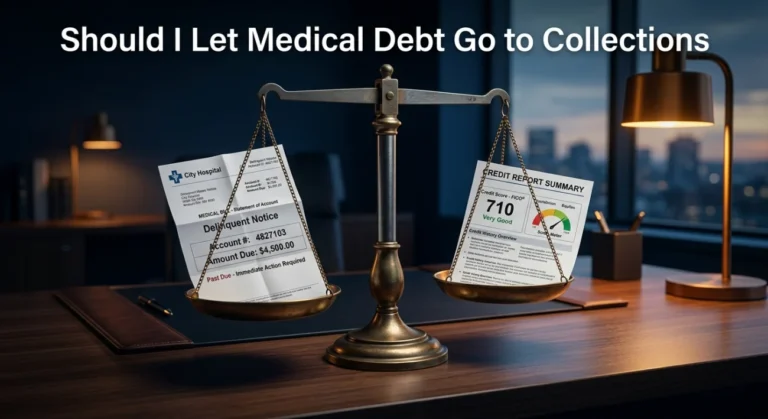
| Strategic decisions | The trade-offs of letting an account go to collections |
| Bills your insurance should have covered | Why insured patients still end up in collections and how to fix it |
| Small balance collection accounts | The specific rules protecting balances under $500 — and what they don’t cover |
Final Thoughts on Handling Medical Collections
Having a medical bill land in collections is stressful, but it is a highly regulated financial event, not a moral failure. The collection industry relies heavily on information asymmetry – they know the rules of the game, and they count on the fact that you do not.
Your first move should never be reaching for your wallet out of fear. Verify the debt, force them to prove they have the right to collect it, and understand that you have leverage. If the debt is valid but you simply cannot afford it, learning how to negotiate a lower medical bill is far more effective once you understand the actual cost basis the collector is working from. And if things escalate to legal threats, it is critical to know whether a medical collection agency can sue you before making your next move.
❓ FAQ
📞 What happens when medical debt goes to collections?
The hospital transfers or sells your account to a third-party agency. This agency will begin contacting you via phone and mail to recover the balance. At this stage, your account is protected by federal laws like the FDCPA, which dictate how and when they can pursue you.
📉 Will medical collections ruin my credit?
Not immediately. Medical debt cannot be reported to credit bureaus until it has been in collections for at least one year. Furthermore, any medical collection under $500 will not appear on your credit report at all, regardless of how long it goes unpaid.
⚖️ Can a collection agency sue me for a hospital bill?
Yes, but it requires a formal legal process. They must file a lawsuit, serve you properly, and win a judgment before they can garnish wages or levy accounts. Lawsuits cost them money, so they typically only litigate larger, verifiable balances.
🏢 How do I know if my medical debt was sold or assigned?
If the wording on your collection letter is unclear, you can simply call the agency and ask. Under federal law, they are required to tell you whether they own the account outright or are collecting on behalf of the original healthcare provider.
💵 Do I have to pay a collection agency or the hospital?
If the debt was assigned, you can sometimes still negotiate with and pay the hospital directly to recall the collection. If the debt was sold to a debt buyer, the hospital no longer owns it, and you must deal directly with the collection agency.
🚫 Should I ignore a medical debt collector?
No. Ignoring a collector does not stop the process. It often accelerates it, signaling to their automated system that you will not pay voluntarily, which can push your account closer to credit reporting or legal escalation.
⏳ When does medical debt get sent to collections?
Most hospitals wait between 60 and 120 days of non-payment or non-response before assigning an account to an outside collection agency. Setting up a payment plan or disputing the bill usually pauses this timeline.
💰 What is the minimum amount a hospital will send to collections?
There is no legal minimum. Hospitals can and do send balances as small as $20 to collections. However, because balances under $500 cannot be reported to credit bureaus, collectors have significantly less leverage to force you to pay small amounts.
📈 Does paying a medical collection improve my credit score?
Yes. Thanks to recent voluntary policy changes by the three major credit bureaus, once a medical collection is paid in full or settled, it is removed from your credit report entirely. This will immediately improve your score, unlike non-medical debts which simply change to a “paid collection” status.
🏥 Can I still apply for financial assistance if my bill is in collections?
Yes, particularly if you were treated at a nonprofit hospital. Under federal tax law (IRS 501(r)), nonprofit hospitals must give patients up to 240 days from their first billing statement to apply for financial assistance, even if the account has already been transferred to an outside collection agency.
Medical Debt Collection
The laws governing what collectors can do and the specific situations where those laws matter most.
- The full legal framework: five federal laws governing what collectors can and cannot do
- Should I Pay Medical Debt in Collections? The Strategic Framework
- Can Medical Debt Collectors Garnish Your Wages? The 45-State Reality and How to Protect Yourself
- Medical Debt Collection Under $500: The Rules for Small Balances
- What to Do When Medical Debt Goes to Collections: The First 30 Days
When the Collector Won't Stop
Knowing your rights matters. These cover what to do when the collector does not back down.
- How to use a HIPAA violation to push back on the collector that is pursuing you
- Negotiating the original bill before the collector gains more leverage over the account
- What collectors in this situation will actually accept and why the math works for both sides
- Whether a structured relief program makes sense when a collector is already involved
- Removing the collection account from your credit report after the account is resolved
Disclosure: The content on this site reflects direct experience inside hospital billing and medical debt collection, and is grounded in federal law and regulation. It is informational in nature. Reading it does not constitute legal advice and does not create any professional relationship. If you are facing a lawsuit, a judgment, or a legal deadline, consult a licensed attorney in your state before taking action.