- The difference between a successful dispute and an ignored one is almost never about who is right. It is entirely about how the dispute is framed, documented, and delivered.
- Specificity is your strongest leverage. Citing exact line items and billing codes forces a senior review, whereas vague complaints about price get closed quickly.
- Written correspondence always beats verbal complaints. Phone calls leave no paper trail, but written letters create a timestamp that makes ignoring you a documented liability.
- Filing your challenge before you make any payments drastically increases your success rate, as refunding money is a much slower bureaucratic process than adjusting an unpaid balance.
The Difference Between an Ignored Complaint and a Winning Dispute
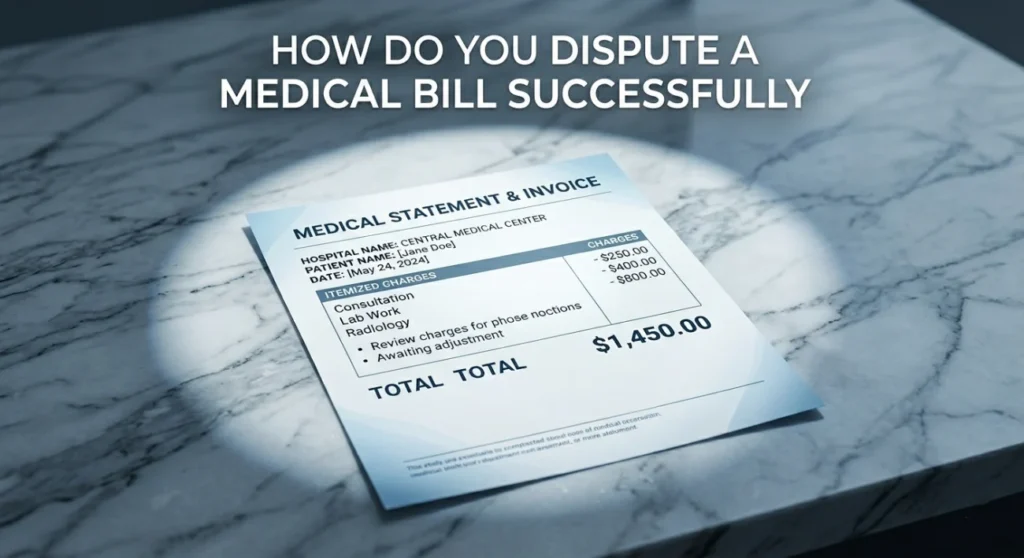
If you are wondering how do you dispute a medical bill successfully, the answer rarely depends on whether you are actually right. Having reviewed thousands of patient accounts from the inside of hospital billing departments, I can tell you that valid errors get ignored every single day simply because the patient submitted their concern the wrong way.
Hospitals are massive administrative machines. The people processing your account are graded on how quickly they can close tasks. When a patient calls to say a bill feels too expensive, the system is designed to politely explain the charges, take a payment, or offer a payment plan. That is the path of least resistance.
To win a challenge against a hospital, you have to change the workflow. You have to submit something that is harder for them to ignore than it is for them to fix. You have to remove the emotion and inject clinical precision.
There is a massive difference between a frustrated complaint and an effective, documented challenge. Here are the specific techniques and approaches that determine whether a billing department dismisses your letter or actually corrects your balance.
Factor 1: Specificity Wins – Escaping the General Queue
The single most important factor in getting your balance corrected is how specifically you identify the error. Inside a hospital revenue cycle office, mail is sorted based on complexity and legal risk.
If a letter arrives saying, “This emergency room charge is outrageous, I was only there for twenty minutes,” it is categorized as a general complaint. A front-line representative will look at the account, confirm the emergency room code is present, and reply with a generic form letter stating that the charges have been verified as correct. They will not dig deeper because you did not give them a specific target to research.
Calling the 1-800 number to complain that the total amount at the bottom of the page does not make sense for the brief care you received.
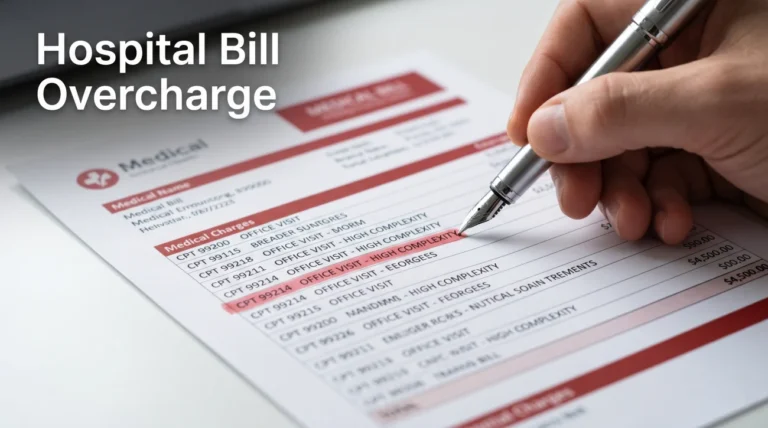
Submitting a written document pointing out that Line Item 7 contains CPT code 99215 (a highly complex visit), but your medical record shows the physician only spent 10 minutes with you, which aligns with CPT code 99213.
When you cite a specific CPT (Current Procedural Terminology) code and match it against the requirements for that code, your file can no longer be handled by a general representative. It must be routed to a senior billing compliance specialist or a medical coder. These specialists know exactly what the rules are. If they see that you are correct, they will often fix the error quietly to clear the issue off their desk. Specificity signals credibility. Vague language signals a complaint.
To understand exactly how to find these specific errors on your itemized statement, you need a solid grasp of how to identify a hospital bill overcharge and spot the most common coding mistakes.
Factor 2: Written Always Beats Verbal
Most patients start by picking up the phone. This is a mistake. Phone calls are inherently disadvantageous for the patient because the hospital holds all the documentation power.
When you call, the representative takes notes in the hospital’s internal system. They choose what to write down. If they summarize your detailed 20-minute explanation of a duplicate charge as “Patient unhappy with balance, requested review,” your entire argument has just been erased from the official record.
“I have seen countless accounts where a patient swore they disputed a charge over the phone three months ago. When I looked at the internal notes, the only entry read: ‘Discussed balance. Advised patient to pay.’ Because the patient had no paper trail, the account was treated as if the dispute never happened.”
A written document creates a verifiable timestamp. It establishes exactly what you are challenging and when you challenged it. Sending an email is fine, but sending your documentation via certified mail with a return receipt is better when dealing with stubborn administrative offices. It proves receipt. It makes ignoring you a documented, conscious choice by the facility.
For the mechanical steps of getting that written document into the right hands, our guide detailing how to dispute an incorrect medical bill maps out the exact routing process.
Factor 3: Legal Frameworks Command Attention
Reviewers read hundreds of letters a week. A letter that says, “I don’t think I should have to pay this because my doctor didn’t tell me it would cost this much,” relies on an appeal to fairness. Billing departments do not operate on fairness; they operate on contracts and compliance.
A successful approach relies on legal and regulatory frameworks. When you use the correct terminology, you signal to the hospital that you understand the rules governing their behavior.
Effective Phrasing Examples:
“I didn’t know this doctor was out of my network.”
“I am disputing this balance as a potential No Surprises Act violation, as these services were rendered at an in-network facility without my prior consent.”
“You promised this would be cheaper.”
“This balance exceeds my Good Faith Estimate by more than $400, and I am formally challenging the discrepancy under the federal patient-provider dispute resolution process.”
Using regulatory language elevates the risk profile of your account. The billing department understands that an unresolved No Surprises Act violation could lead to federal scrutiny, whereas a general disagreement about price carries no administrative risk. If your situation involves out-of-network providers at an in-network hospital, framing your letter as a dispute surprise medical bill issue changes the entire conversation.
Factor 4: Timing Matters – The Pre-Payment Advantage
Many patients pay a suspicious bill just to avoid dealing with collections, assuming they will sort out the errors and get a refund later. This is a massive tactical error.
Before you pay, the hospital wants something from you. You have leverage. If the bill is inaccurate, withholding payment while submitting a formal, written challenge gives the billing department an incentive to research your account so they can finally collect the correct amount.
After you pay, your money is deposited. To get it back, you are no longer dealing with the revenue cycle team trying to collect; you are now dealing with the accounts payable team trying to issue a corporate refund. The internal friction is enormous.
| Dispute Timing | Hospital’s Incentive | Typical Resolution Speed |
|---|---|---|
| Pre-Payment | High – They need the account cleared to collect revenue. | 15 to 45 days |
| Post-Payment | Low – The money is already secured in their accounts. | 60 to 120+ days |
Always challenge the errors before you pay the balance. While you are actively challenging the accuracy of the charges, most hospital systems will place a temporary hold on the account, pausing the collection clock while the review takes place.
Factor 5: Building the Complete Documentation Package
You cannot simply write a letter and expect the billing department to pull all the necessary records to prove you right. They do not have the time, and quite frankly, it is not their job to build a case against themselves. You must provide a complete package that makes correcting the error the easiest possible action for the reviewer to take.
A complete submission package should always include:
- 📋 The Itemized Bill: Do not use the summary statement. You need the document showing every individual charge and code, with the specific items you are challenging clearly highlighted.
- 📋 The Explanation of Benefits (EOB): If you have insurance, include the statement showing what your insurer agreed to cover and what they flagged as your responsibility.
- 📋 Medical Records: If you are arguing that a service was not rendered, or that a code is too complex for the visit, include the clinical notes for that specific day.
- 📋 Communication Logs: A written summary of any previous phone calls, including the dates, times, and the names of the representatives you spoke with.
When a reviewer opens an envelope and sees an itemized bill with a highlighted line item, stapled to a medical record that clearly contradicts the charge, the decision is already made. The documentation did the heavy lifting for them. But what if they still say no?
Factor 6: Escalation Willingness Signals Credibility
One of the most subtle differences between a successful outcome and a brick wall is how you handle the next step. Even with perfect documentation, an initial letter often gets a form response denying the request. At this point, the hospital is testing whether you will go away.
You signal your credibility by mentioning your willingness to escalate, but doing so as a matter of process, not as an emotional threat. Yelling at a representative that you are going to sue accomplishes nothing. Calmly stating in your letter that unresolved issues will be routed to Patient Relations and the State Insurance Commissioner triggers a completely different internal workflow.
Inside the billing system, an account threatened with a formal administrative grievance is often re-categorized from the general ‘active collection’ queue to a ‘compliance review’ status. Standard billing representatives are measured on their efficiency: how many accounts they close or collect on per hour. A complex, escalated grievance destroys those metrics. By signaling that you know the formal escalation paths, you turn your account from a standard collection effort into an administrative liability. The easiest way for the reviewer to clear that liability off their desk is to approve the correction.
What to Do When They Stonewall You
Sometimes, despite doing everything right, the billing department simply stops responding. If your written dispute is met with silence for more than 30 days, or if you receive repetitive, automated denials without explanation, you must force the issue out of the standard billing queue.
First, escalate to the hospital’s Patient Relations office. Their primary job is risk management, not revenue collection. Provide your documented trail and request a formal grievance review. If that fails, escalate your correspondence directly to the facility’s Billing Director by name.
Crucially, stonewalling often happens when the hospital and your insurance company are pointing fingers at each other. If the hospital claims the balance is correct because your insurer denied the coverage, your fight is no longer with the facility. You must immediately shift gears and follow the process for how to dispute a medical bill with insurance to force the payer to reprocess the claim.
The Trap Where Most Patients Give Up
The system relies heavily on patient fatigue. The most common scenario I witnessed was a patient who correctly identified an overcharge, called the billing office, and was told, “I am looking at the file and the charges are correct.”
The patient, believing the hospital must know best, simply gave up and paid the bill.
The representative on the phone did not do a deep clinical review of the coding standards. They simply verified that the code on the doctor’s chart matched the code on the invoice. That is not an audit; that is a data-entry check. The billing department’s initial job is to close the inquiry. You cannot let a single phone call deter you.
⚠️ Warning: Never accept a verbal confirmation that “the bill is correct” as the final answer on a highly suspicious charge. Always force them to put their reasoning in writing by submitting a formal letter.
If you let the initial rejection stop you, you are playing right into the standard workflow. You must follow up. If you are ready to put this strategy into action, your next step is to draft the actual correspondence using the proper framework for a medical bill dispute letter.
What Happens After the Review
A successfully corrected bill is not always an affordable bill. Once the coding errors are removed, you transition from challenging accuracy to negotiating affordability. If the remaining balance is factually correct but still financially devastating, you must shift your strategy to learn how to negotiate medical bills based on financial hardship and self-pay discounts.
On the other hand, if your dispute drags on and the hospital improperly forwards your account to an aggressive third-party collector who begins disclosing your personal medical treatments to pressure you into paying the disputed amount, they have crossed a strict regulatory line. In those specific scenarios, explore whether you are dealing with a medical debt collection HIPAA violation to regain your leverage and stop the harassment.
Final Thoughts: Strategy Over Emotion
Winning a challenge against a healthcare facility is a test of administrative endurance. When you provide specific codes, create an undeniable paper trail, and signal your willingness to escalate, you become a highly informed liability to the billing department’s metrics. Stick to the documentation, remove the emotion, and force the system to prove its math.
❓ FAQ
📞 Can I just call the billing department to fix my bill?
You can call to ask questions, but you should never rely on a phone call to officially challenge a charge. Phone calls leave no paper trail and are easily dismissed. Always follow up any phone conversation with a written letter outlining the specific errors.
⏳ How long does a hospital take to respond to a written dispute?
Most hospital billing departments will take between 30 to 45 days to investigate and respond to a formal written inquiry. If you have not received a response after 30 days, you should send a follow-up letter referencing your original correspondence.
📄 What is an itemized bill and why do I need it?
An itemized bill is a detailed statement that breaks down every individual medication, supply, and procedure with its associated billing code and price. You need it because summary bills hide errors, while itemized bills allow you to see exactly what you are being charged for.
🛑 Will disputing a bill hurt my credit score?
No, the act of questioning a bill does not hurt your credit. Furthermore, hospitals generally pause collection activities while an account is under formal review. Medical debt also cannot be reported to credit bureaus until it has been in collections for a full year.
💳 Should I pay the bill first to avoid late fees?
It is generally better to withhold payment on the specific portion of the bill you are challenging. Once you pay, the hospital has little incentive to investigate quickly, and getting a refund requires navigating a much slower accounts payable process.
⚖️ Do I need to hire a lawyer to fight my hospital bill?
In most cases, no. Finding coding errors, duplicate charges, or No Surprises Act violations can be done entirely on your own by comparing your itemized bill to your medical records and insurance explanations. Lawyers are typically only needed for complex malpractice or severe fraud cases.
🏥 What if the hospital says the charges are correct but I still disagree?
If the billing department denies your request, you can escalate the matter. You can file a formal grievance with the hospital’s Patient Relations department or escalate the issue to your state’s Insurance Commissioner if your health plan is involved.
📝 What if my insurance company already paid their portion?
You can still challenge the remaining balance you owe. In fact, if you find an error that proves your insurance was overcharged, you can notify your insurance provider. They have entire fraud departments dedicated to recovering overpayments from hospitals.
🏷️ What happens if the error is fixed but the bill is still unaffordable?
If the bill is medically and administratively accurate but you cannot afford it, you must switch from challenging the charges to negotiating the balance. You can apply for the hospital’s financial assistance program or ask for a self-pay discount.
✉️ Should I send my letters through certified mail?
Yes. Sending your documents via certified mail with a return receipt provides legal proof that the hospital received your correspondence. It prevents them from claiming your letter was lost in the mail and forces them to acknowledge the timeline.
Medical Bill Dispute
How to challenge a hospital bill from the initial dispute through the collections process.
- Step-by-step guide to challenging a hospital bill from itemization to formal dispute
- Medical Bill Dispute Letter: What to Include, How to Send It, and What Makes It Work
- How to Dispute a Medical Bill Without Insurance: Rights for Self-Pay Patients
- Should I Dispute Medical Bills? How to Decide Before You Invest the Time
- How to Dispute a Surprise Medical Bill: The Federal Process Step by Step
When Disputing Is Not Enough
A successful dispute resolves some situations. These cover when the bill or the collector remains.
- Using a HIPAA violation to challenge how your bill was transferred to the collector
- Negotiating the bill you are disputing and what hospitals are actually willing to reduce
- Settling the remaining balance when a dispute does not fully resolve the account
- Debt relief programs that can handle disputed and overbilled medical accounts
- How a successful bill dispute can result in removing the collection from your credit report
Disclosure: The content on this site reflects direct experience inside hospital billing and medical debt collection, and is grounded in federal law and regulation. It is informational in nature. Reading it does not constitute legal advice and does not create any professional relationship. If you are facing a lawsuit, a judgment, or a legal deadline, consult a licensed attorney in your state before taking action.