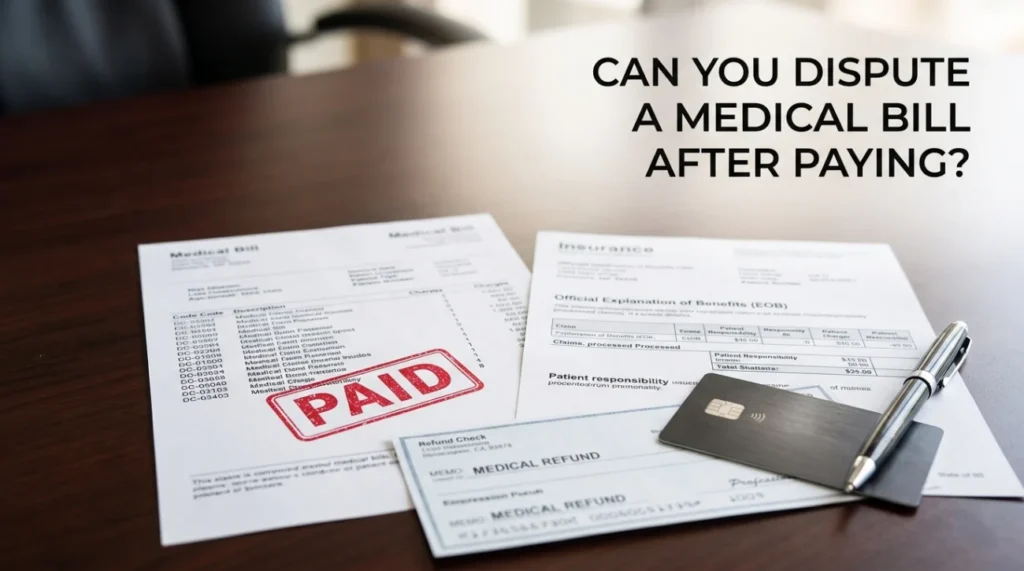
- The right to challenge remains: Paying a hospital bill does not legally erase your right to challenge errors. You can request a correction and a refund.
- The timeline shifts: Pre-payment disputes pause collections, but post-payment disputes require navigating the hospital accounts payable department. This makes the process slower.
- Documentation is everything: To get money back, you must provide the itemized bill and your Explanation of Benefits (EOB) showing exactly where the overcharge occurred.
Discovering a Billing Error After the Balance is Paid
You opened the mail, saw a massive balance from a recent hospital visit, and panicked. Maybe you were worried about it going to collections. Maybe the billing department told you that you had to pay immediately to keep your account in good standing. So, you handed over your credit card information and cleared the balance.
Two weeks later, your insurance Explanation of Benefits arrives in the mail, showing that your actual patient responsibility was supposed to be a fraction of what you paid. Or perhaps you finally requested the itemized statement and found charges for medications you never received. Now you are staring at a zero balance on your hospital portal, wondering if you just surrendered your leverage.
The most common question patients have when they discover this is simply: can you dispute a medical bill after paying? The answer is absolutely yes. The right to challenge a billing error does not end the moment a transaction clears.
I have processed thousands of patient accounts from inside hospital billing departments. I have seen exactly what happens when a patient identifies an overpayment and demands their money back. The process is entirely different from a pre-payment dispute. It requires more patience and much more specific documentation. You are no longer fighting to avoid paying. You are fighting to force the hospital to issue a refund check. Understanding how the internal system handles these requests is the only way to successfully pull your money back out of the revenue cycle.
The System Shift: From Accounts Receivable to Accounts Payable
To understand why the process feels so difficult, you have to look at how hospitals are structured. When you ask, can I dispute a medical bill after paying, you are really asking if you can reverse a completed accounting cycle.
Before you pay, your account lives in Accounts Receivable. This department has a massive incentive to talk to you. Their entire job is to collect money and close open files. If you find an error before you pay, a billing reviewer can simply adjust the balance downward in the software, issue a new statement, and move on. It is a seamless internal adjustment.
Once you pay the balance in full, your account zeroes out. To the Accounts Receivable system, your file is closed. A successful medical bill dispute after payment requires the hospital to take money they have already deposited and send it back to you. That request has to cross over to a completely different department: Accounts Payable.
“From my experience inside the billing office, refund requests sit in a different queue. Accounts Payable does not exist to assist patients. It exists to protect the hospital’s cash flow. Before they cut a check, a supervisor has to verify the overpayment, confirm that insurance is not going to claw back their own payment, and approve the outbound transfer. That is why a refund takes sixty days, while a bill only takes five days to generate.”
This structural friction is the reason verbal complaints do absolutely nothing at this stage. Calling the main billing line and saying you think you overpaid will only result in an agent telling you the balance is zero. To trigger the Accounts Payable review, you must force the issue on paper.
The Documentation Required for a Post-Payment Refund
Because you no longer have the leverage of withholding payment, your documentation must be flawless. If you want to know how to dispute a medical bill after you paid, the answer is that you must build a paper trail that leaves the hospital no administrative choice but to issue a refund.
You cannot just ask them to review the account. You have to show them the exact math error. To do this, you need three specific documents.
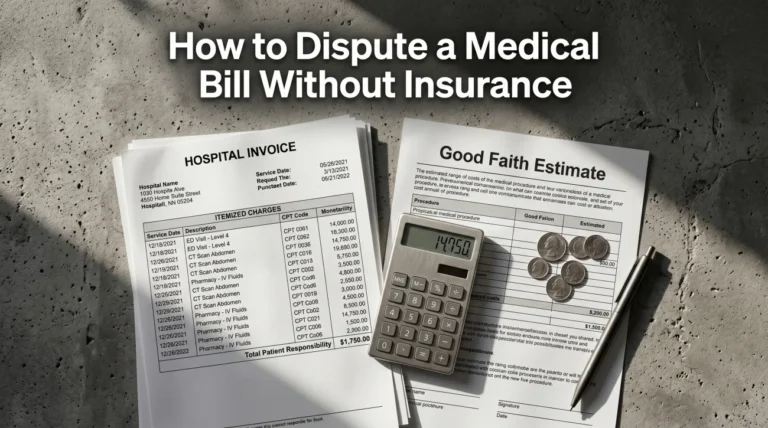
- The Itemized Bill: This is not the summary statement you paid. You must request the detailed bill showing every individual CPT billing code, medication, and facility fee.
- The Explanation of Benefits (EOB): This comes from your insurance company. It clearly states the “Provider Charge” versus the “Allowed Amount” and strictly defines your “Patient Responsibility.”
- Your Proof of Payment: A credit card receipt, bank statement, or the zero-balance statement from the hospital showing the exact amount you paid out of pocket.
Most post-payment discrepancies occur because patients pay the “Provider Charge” before the insurance company applies their contracted discount. For example, the hospital bills you $2,000. You pay it. Two weeks later, the EOB shows the contracted rate for that service is only $800, and your responsibility is $200. The hospital now has a $1,800 credit balance on your account.
Hospitals routinely hold these credit balances. They rarely mail you a check proactively. They wait for you to notice. Identifying common hospital billing errors like duplicate charges or ignored insurance discounts is the first step in reclaiming that money.
This is where specificity wins. A generic complaint saying “I think I overpaid” will stall out in Accounts Payable. However, a documented claim stating, “Line item 4, CPT code 99284, was paid in full out-of-pocket, but the EOB confirms my maximum responsibility is a $50 copay,” forces the reviewer to process a specific, undeniable math correction.
Framing the Refund Request
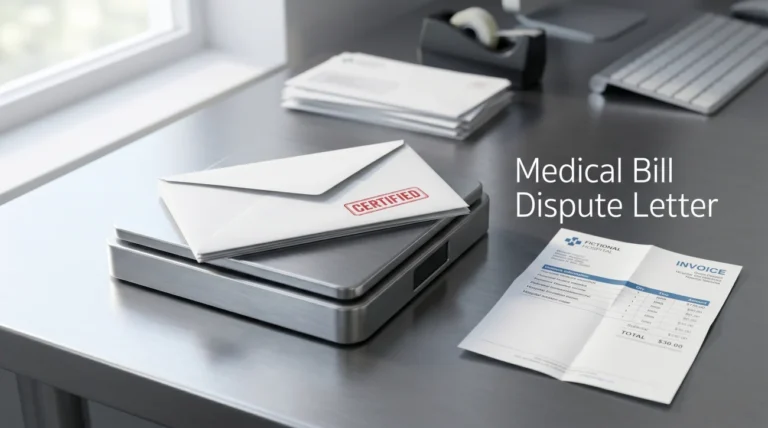
Disputing medical bill after paying requires a formal written request. Do not rely on the patient portal messaging system. Send an email to the billing department to create a timestamp, and follow it up with a certified letter.
Your letter must bypass the front-line phone agents and give the billing supervisor exactly what they need to authorize a check. Keep it entirely factual. Emotion does not process refunds. Math does.
To the Billing Department Supervisor,
I am writing to formally request a refund for an overpayment on Account #[Your Account Number], for services dated [Date of Service].
On [Date you paid], I paid a total of [Amount Paid] based on the initial statement I received from your facility. However, I have now received the Explanation of Benefits from my insurance provider. The EOB confirms that the maximum patient responsibility for this date of service is [Amount from EOB].
Because I paid [Amount Paid] before the insurance adjustment was fully processed, there is a credit balance of [Refund Amount] on my account.
I have enclosed a copy of my proof of payment and the corresponding EOB highlighting the correct patient responsibility. Please review this account, apply the correct insurance adjustments, and issue a refund check to my mailing address for the overpaid balance of [Refund Amount].
I look forward to your written confirmation within 30 days.
Sincerely,
[Your Name]
This format works because it does the reviewer’s job for them. It tells them exactly where to look in their system to verify the credit balance. If you are dealing with an actual coding error rather than an insurance adjustment, you will need to follow the exact steps to get a specific billing error corrected, but the core requirement of demanding a physical refund remains the same.
The Deadlines and Drop-Offs for Paid Bills
Timing is critical when managing a medical bill dispute after payment. Unlike unpaid bills, which can linger in collections for years, your window to recover your own money is much tighter.
In most hospital systems, refund requests are processed within a 60 to 90 day window. This accounts for the time it takes to verify the funds, route the request through Accounts Payable, and physically cut a check. You must track this timeline. Set a reminder to follow up at the 30-day mark.
| Time Since Payment | Status of Refund Request |
|---|---|
| 0 to 90 Days | Optimal window. Account is active in the recent archives. EOBs are easily matched to the date of service. |
| 3 to 6 Months | Still recoverable, but requires more manual review by the billing team to pull archived records. |
| Over 12 Months | Highly difficult. Most hospital accounting systems close their books annually. Recovering funds after a fiscal year ends requires administrative overrides. |
Some states have strict laws governing how quickly a hospital must refund an overpayment once it is identified. However, across most jurisdictions, the 12-month mark is the practical point of no return. If you wait more than a year to check your EOBs against your receipts, you will likely find that the hospital will simply refuse to reopen the books.
The Federal Exception: The No Surprises Act
There is one major exception to the standard hospital refund timelines. If you are asking if can you dispute a paid medical bill that involved an out-of-network provider at an in-network facility, you have federal law on your side.
The No Surprises Act (NSA) strictly prohibits balance billing in specific situations, such as emergency care or receiving anesthesia from an out-of-network doctor at your in-network hospital. If a provider billed you illegally under the NSA, and you paid it out of fear or confusion, the provider is legally obligated to return the money.
Federal rules dictate that if a provider receives a payment that violates the No Surprises Act, they must refund the excess amount to the patient. If the provider refuses, you can escalate the issue directly to the federal No Surprises Help Desk. The threat of federal regulatory enforcement is usually enough to make a hospital billing director expedite your refund.
Credit Card Disputes: The Nuclear Option
Many patients who pay with a credit card wonder if they can bypass the hospital entirely. They call their credit card company and attempt to initiate a chargeback. While this is technically an option, you need to understand the consequences.
Calling Visa or Mastercard the day you find an error and claiming the charge was fraudulent. The hospital will fight the chargeback, prove you authorized the swipe, and immediately send your revived balance to a collections agency.
Sending a written refund request first. Giving the hospital 30 days to respond. If they ignore your documented proof of overcharge, using that written paper trail to prove to your credit card company that you attempted to resolve a billing error in good faith.
⚠️ Warning: A successful chargeback takes the money away from the hospital, but it does not erase the balance in their billing software. The hospital will view your account as unpaid and delinquent. You should only use a credit card dispute as an absolute last resort if the billing department goes completely silent. Be prepared to defend your account against debt collectors if you force a reversal this way.
The Cost of Assuming Payment is Final
The biggest hurdle in post-payment recovery is psychological. The relief of seeing a zero balance is incredibly powerful. You dealt with the stress, you paid the money, and you just want to move on. When the EOB arrives weeks later suggesting an error, the sheer exhaustion of having to call the hospital back is enough to make most people throw the paperwork in the trash.
Can you get a refund on a medical bill? The system is designed to make you feel like the answer is no. Billing departments do not make it easy to find the refund request forms. They do not advertise their credit balances. They bank on patient fatigue. The pain point here is not just the lost money; it is the feeling that the hospital’s administrative wall is too high to climb.
By assuming the transaction is final, you are effectively leaving a tip for a massive healthcare corporation. You have to separate the emotional fatigue from the administrative process. Submitting one well-documented letter takes less than an hour. If that letter recovers four hundred dollars in overcharges, it is the most valuable hour you will spend all month.
Final thoughts: Reclaiming Your Financial Boundaries
Do not let a zero balance intimidate you into walking away from your own money. The hospital billing cycle is prone to massive, systemic errors. Payments cross in the mail, insurance companies adjust their payouts retroactively, and coding mistakes are entirely routine.
If you have the evidence in your hands, the money belongs to you. Bypassing the front-line phone system, putting the math on paper, and forcing Accounts Payable to review the EOB gives you back the control you thought you lost when you swiped your card. It requires persistence, but once you understand the full process to challenge healthcare charges, you are never entirely at the mercy of a hospital’s billing timeline.
If you discover that your refund request leaves you with a balance that is still unaffordable, you must pivot and review how to approach the hospital for financial relief. Alternatively, if your account is still active and you have not paid yet, make sure you know exactly what makes a pre-payment dispute successful so you can avoid the refund process altogether.
❓ FAQ
💳 Can I dispute a medical bill after I already paid it in full?
Yes. Paying a medical bill does not legally prevent you from challenging a billing error or an insurance adjustment failure later. You have the right to request a formal review and a refund.
⏳ How long do I have to ask for a refund on a hospital bill?
Most hospitals process refund requests optimally within 90 days of payment. While you can sometimes push for a refund up to 12 months later, it becomes significantly harder once the hospital closes its annual accounting books.
📄 What documents do I need to prove I overpaid?
You must provide the hospital’s detailed itemized bill, your proof of payment (like a credit card receipt), and the Explanation of Benefits (EOB) from your insurance showing that your responsibility was lower than what you paid.
📞 Should I call the billing department to get my refund?
You can call to find out exactly where to send your documentation, but you should never rely on a phone call to process the refund. Always submit your refund request and proof in writing via certified mail.
🏦 Why does a medical refund take so long to arrive?
Refunds require moving your account from Accounts Receivable to Accounts Payable. A billing supervisor must manually review the file, verify that insurance won’t reverse their payment, and authorize a physical check. This typically takes 60 days.
🛑 Can I just do a chargeback on my credit card?
You can, but it is risky. If you force a chargeback without giving the hospital a chance to review your written dispute, the hospital will likely consider your account delinquent and send the balance straight to a collection agency.
⚖️ What happens if the hospital refuses to refund an out-of-network overcharge?
If the overcharge violates the federal No Surprises Act, the hospital is breaking federal law by keeping the money. You can escalate the issue immediately by filing a complaint with the federal No Surprises Help Desk.
🏥 Does the hospital automatically send a check if my insurance pays late?
Rarely. If you pay out of pocket and then insurance pays the hospital later, the hospital usually leaves the overpayment as a “credit balance” on your account. You almost always have to discover it and ask for it back.
📝 What should I say in my refund request letter?
State your account number, the date of service, the amount you paid, and point directly to the EOB showing the lower patient responsibility. Request a specific dollar amount to be refunded by check within 30 days.
🤔 What if I paid a collection agency and then found an error?
Recovering money from a third-party debt collector is incredibly difficult. You will usually have to prove the error to the original hospital, have the hospital recall the debt, and ask the hospital to instruct the agency to refund you.
Medical Bill Dispute
How to challenge a hospital bill from the initial dispute through the collections process.
- Step-by-step guide to challenging a hospital bill from itemization to formal dispute
- How to Dispute a Medical Bill With Insurance: The Appeal Process That Most Patients Skip
- Should I Dispute Medical Bills? How to Decide Before You Invest the Time
- Surprise Medical Bill Dispute: Your Rights Under the No Surprises Act and How to Use Them
- How Do You Dispute a Medical Bill Successfully? What Actually Works
When Disputing Is Not Enough
A successful dispute resolves some situations. These cover when the bill or the collector remains.
- Using a HIPAA violation to challenge how your bill was transferred to the collector
- Negotiating the bill you are disputing and what hospitals are actually willing to reduce
- Settling the remaining balance when a dispute does not fully resolve the account
- Debt relief programs that can handle disputed and overbilled medical accounts
- How a successful bill dispute can result in removing the collection from your credit report
Disclosure: The content on this site reflects direct experience inside hospital billing and medical debt collection, and is grounded in federal law and regulation. It is informational in nature. Reading it does not constitute legal advice and does not create any professional relationship. If you are facing a lawsuit, a judgment, or a legal deadline, consult a licensed attorney in your state before taking action.