- More than half of adults with health care debt report receiving a medical bill that contained an error, but most struggle to get these mistakes corrected.
- A major survey found that 51 percent of patients who received an erroneous bill either could not successfully fix it or simply did not try at all.
- Alarmingly, 32 percent of patients had their disputed bill sent to collections while the dispute was still actively unresolved.
- From inside the billing department, this data describes a system that is fundamentally not designed to help patients navigate it without specialized knowledge.
- Filing a dispute in writing and sending it to the correct department is the only reliable way to pause the automated collection cycle.
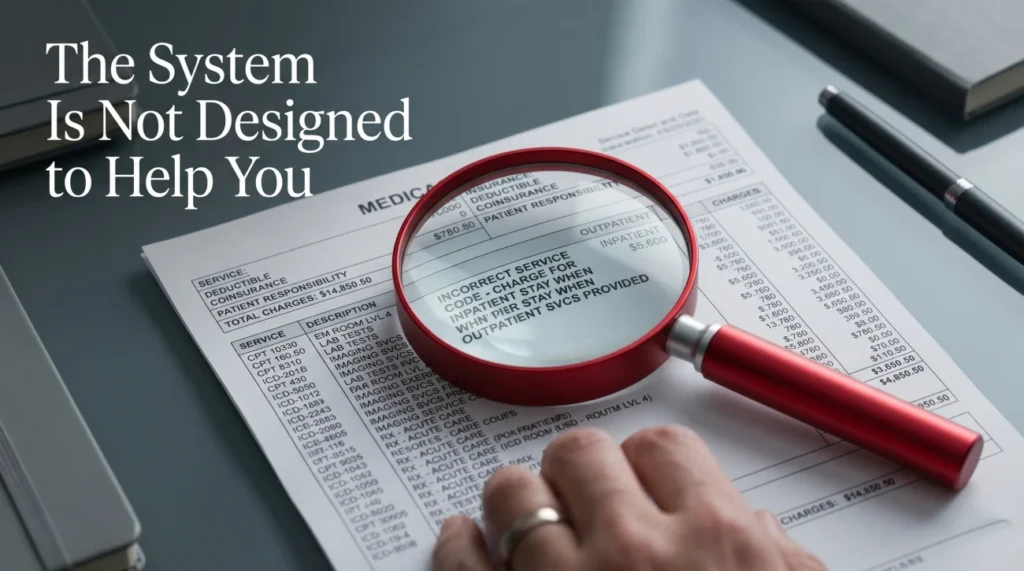
The System Is Not Designed to Help You Navigate It
In my years of working inside hospital billing departments, I took thousands of phone calls from patients who knew their bill was wrong but could not figure out how to make the system fix it. They would call the general support line, explain the issue, and assume the problem was being handled. Weeks later, they would call back in a panic because they had just received a collection notice for the exact same disputed amount.
A recent KFF survey of adults with health care debt confirmed exactly what I saw on the floor every day. The survey found that 53 percent of people received a medical or dental bill they thought contained an error. Most of them took some action to address it. But 51 percent of those who received an erroneous bill either could not successfully fix it or eventually gave up without trying.
Even worse, 32 percent had a disputed bill sent to collections while the dispute was still unresolved. When you understand the internal mechanics of a billing department, you realize this is not a string of isolated accidents. This data describes a system that is not designed to help patients navigate it. The system is built for automated revenue collection, and pausing that automation requires knowing exactly which levers to pull.
The KFF Findings: Who Fails and Why
To understand why so many patients fail to correct their bills, we have to look closely at the numbers. The KFF consumer assistance survey paints a clear picture of the consumer assistance gap in American healthcare.
According to the data, when patients suspect an error, the vast majority (79 percent) do take some initial action to dispute it. They are not simply ignoring the problem. However, the success rate drops off a cliff after that first point of contact.
The fact that 51 percent of people with erroneous bills walk away with no resolution means the friction of the process is working exactly as intended. If you are debating whether you should dispute medical bills, you must understand that making a single phone call is rarely enough to force a massive hospital system to correct its ledger.
What “Could Not Fix It” Actually Looks Like
When the KFF report says patients “could not fix it,” what does that actually mean on a practical level? From my perspective behind the desk, a failed dispute usually falls into one of three distinct categories.
First, some disputes fail because patients do not know which documentation to provide. A patient might call and say a charge is incorrect, but unless they specifically ask for an itemized bill and point to a specific CPT code that does not match their medical records, the representative has nothing concrete to send to the coding review team.
Second, disputes fail because patients reach the general billing line rather than the actual dispute review team. General customer service representatives are trained to take payments and set up payment plans. They often lack the authorization to alter clinical billing codes or override system charges.
Finally, many disputes fail because the first “no” felt final to the patient, even though it was not. A representative might say the charge is valid based on what the screen shows. Patients often accept this answer, not realizing they can escalate the issue to a patient financial counselor or patient relations department for a deeper manual audit.
Calling the general 1-800 number on your statement, saying the bill feels too high, and hanging up assuming the representative is fixing it.
Requesting an itemized bill, identifying the exact line item error, and submitting a formal written dispute to the hospital’s dedicated dispute or compliance department.
The 32 Percent Statistic That Should Terrify You
Of all the data points in the KFF survey, the finding that 32 percent of patients had their disputed bill sent to collections during the dispute period is the statistic I find most troubling.
An active, documented billing dispute should not result in a collection referral. Standard billing compliance dictates that accounts under active review should be placed on an administrative hold. That it still happens 32 percent of the time suggests three massive systemic failures.
Either the dispute was never properly documented by the patient in writing, the general billing representative failed to flag the account for a hold in the computer system, or the hospital’s automated software simply overrode the hold and sent the account to collections anyway. Each of those is a different problem, but they all result in the same nightmare for the patient: dealing with a debt collector for a bill that is fundamentally incorrect.
This is why understanding how to dispute a medical bill involves more than just pointing out a math error. It requires knowing how to protect your credit report while the hospital takes its time investigating the issue.
What Patient Counselors Do That You Can Learn
The gap between a patient needing help and a hospital actually providing it is exactly the gap that a patient financial counselor role was designed to fill. We know the internal rules of the game.
“When I managed escalated accounts, the difference between a successful dispute and a failed one was almost always the paper trail. A verbal complaint over the phone rarely paused the 120-day collection clock. A written dispute sent via certified mail forced the system to generate a formal review ticket.”
We know who in the billing department actually handles coding reviews, and it is almost never the person who first answers the phone. We know the escalation path. We know when a hospital bill overcharge involves a systemic coding error versus a simple typo, which changes how you need to approach the review.
Most importantly, we know that knowing exactly what happens when you dispute a medical bill allows you to anticipate the hospital’s next move. If you know the system is going to try to send your account to collections automatically, you can take proactive steps to block it.
The Consumer Assistance Gap
The KFF report concludes that many adults facing health care debt believe a state consumer assistance program would be deeply helpful. The reality is that most states do not have robust, publicly funded programs to help patients fight billing errors.
The gap between a patient needing help navigating a billing dispute and the resources that actually exist to help them is massive. That exact void is why the patient financial counselor role exists inside hospitals, and it is why we share this information here. If you are trying to negotiate medical bills or force a correction, understanding the internal process is your strongest advantage.
You cannot rely on the hospital’s automated system to catch its own mistakes, but you also do not need to be a billing expert to fight back. By learning how the system operates, you can bridge that assistance gap yourself. If you are ready to take the next step, learning exactly how to dispute an incorrect medical bill is the most effective way to protect your finances.
Final thoughts: Your persistence pays off
Do not become part of the 51 percent who give up. The fact that the system is hard to navigate does not mean the hospital is right. It simply means the process requires deliberate steps to reach the correct department.
Your persistence is incredibly effective. When you bypass the automated cycle and force a real manual review, you regain control over the situation and protect yourself from paying for administrative mistakes.
Sources Referenced
The data and statistics discussed in this article are drawn from the following primary research:
- KFF (2024): Could Consumer Assistance Be Helpful to People Facing Medical Debt? An analysis of a nationwide survey tracking how adults attempt to navigate and resolve medical billing errors and the failure rates associated with those disputes.
❓ FAQ
📞 Should I call the billing department to dispute a medical bill?
Yes, a phone call is a good first step to request an itemized bill or ask clarifying questions. However, for a dispute to be officially tracked, you will usually need to submit your findings in writing so the review team has something concrete to audit.
⏱️ How long does a hospital have to respond to a billing dispute?
Hospitals are not bound to a fixed resolution window for an internal dispute, which is why requesting an administrative hold on your account is so critical. It protects you from collections while they take their time reviewing the file.
🛑 What happens if my disputed bill goes to collections anyway?
If you submitted your dispute in writing, you can send a copy of that letter and your mailing receipt to the collection agency. Legitimate collectors will typically pause their activity to verify the debt with the hospital once they see proof that the account is actively under dispute.
📄 Can I dispute a bill if I have already made a partial payment?
Yes. Making a partial payment does not cancel your right to dispute the remaining charges. However, it is much harder to get a refund for an overpayment than it is to get an unpaid charge corrected, so always dispute before paying the disputed portion.
🏥 Who do I escalate to if the billing rep refuses to help?
Stop talking to the general billing line. Ask to speak with a patient financial counselor, a patient advocate, or the hospital compliance officer. These departments have the authority to pull clinical records and audit the codes.
⚖️ Do I need a lawyer to dispute a hospital overcharge?
In most standard error cases, no. You can navigate the internal audit process yourself by requesting the itemized bill and matching it to your records. Legal help is typically only considered if a hospital flatly refuses to correct a well-documented error and the financial impact is exceptionally high.
The Full Topic Map
Insights articles draw from all five topic areas. The pillar guides are the best starting point for each.
- The full legal framework: five federal laws governing what collectors can and cannot do
- Step-by-step guide to challenging a hospital bill from itemization to formal dispute
- Every option for resolving medical debt including forgiveness, relief programs, and settlement
- How medical debt gets reported, what the current rules allow, and what protects you
- State-by-state: statute of limitations, collection limits, and consumer protections
Where Most People Need Help
Five situations most people dealing with medical debt eventually face.
- How to identify and use a HIPAA violation against a medical debt collector
- How to negotiate a medical bill down from what the hospital originally billed
- What collectors will actually accept when settling medical debt in collections
- Whether national debt relief programs actually help with medical bills
- What actually works for removing medical debt from your credit report
Disclosure: The content on this site reflects direct experience inside hospital billing and medical debt collection, and is grounded in federal law and regulation. It is informational in nature. Reading it does not constitute legal advice and does not create any professional relationship. If you are facing a lawsuit, a judgment, or a legal deadline, consult a licensed attorney in your state before taking action.