- Data shows 74% of patients who formally challenge billing errors get them corrected, yet nearly 40% of patients never even contact their provider when a bill seems wrong.
- Disputing is worth the time if you have a specific, identifiable error (like a duplicate charge or wrong billing code) and the documentation to prove it.
- If the bill is entirely accurate but you simply cannot afford it, filing a formal dispute is the wrong strategy. You should pursue financial assistance or negotiation instead.
The Reality of Fighting Hospital Charges
When an unexpectedly high hospital statement arrives in the mail, the immediate reaction is usually a mix of panic and frustration. You look at the balance, you look at the confusing line items, and the primary question becomes obvious. Should I dispute medical bills, or is fighting the healthcare system a complete waste of time?
The answer is buried in the data, and it is highly favorable to the patient. A recent JAMA Health Forum study revealed a staggering statistic. Of the patients who actually disputed billing errors, 74% saw those errors corrected and their balances reduced. However, the exact same study noted that only 61% of patients with a legitimate billing concern even bothered to contact the provider.
That gap between knowing something is wrong and actually doing something about it is exactly where hospitals collect money they are not owed.
From my time processing thousands of patient accounts, I can tell you that the billing system is built on momentum. It is designed to move accounts automatically from billing to late status to collections without human intervention. To stop that momentum, you have to place a roadblock in the system. Understanding when to place that roadblock, and when to take a different path entirely, is how you protect your finances without burning out.
When Disputing Is Clearly Worth the Effort
Not every high balance is an error. To decide if it is worth fighting a medical bill, you need to verify that your situation fits into a category that billing departments actually recognize as correctable. If your account matches one of the following criteria, the time investment is almost always justified.
You Found a Specific, Identifiable Error
From my desk in billing, the strongest position you can have is pointing to a specific line on a piece of paper and proving it is factually incorrect. If you were billed for a medication you never received, that is a factual error. If your chart shows a 15-minute consultation but you were billed for a complex 45-minute critical care code, that is upcoding.
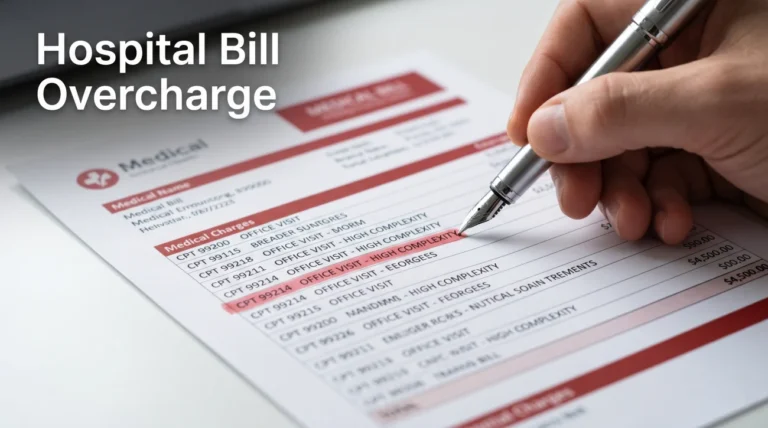
If you can match a specific charge to a specific mistake, you should always push back. To understand exactly what these mistakes look like on paper, you can review the most common patterns of how hospitals overcharge on routine statements.
The Dollar Amount Justifies the Time
If the error is a $600 duplicate charge for a CT scan read, spending two hours to gather documents and write a letter yields a return of $300 an hour. When assessing whether disputing a medical bill is worth it, always run that simple math. Generally, any clear error over $100 is highly worth the paperwork required to challenge it.
You Have a Federal Protection Violation
Since the implementation of the No Surprises Act, patients have powerful federal tools. If you went to an in-network hospital but received a massive bill from an out-of-network emergency room doctor you never chose, that is highly actionable. The same applies if you are uninsured and your final bill exceeds your Good Faith Estimate by $400 or more.
Under federal rules, these situations carry significant protections. Hospitals have strong regulatory incentives to resolve them quickly. If you have this type of protection, using it is mandatory.
When Disputing Is the Wrong Strategy
One of the most common reasons patients fail to resolve their balances is that they choose the wrong tool for their problem. A formal challenge is designed to fix a mathematical or coding mistake. It is not designed to fix the high cost of American healthcare.
The Bill Is Accurate, But Unaffordable
If you stayed in the hospital for three days, received all the treatments listed, and your insurance processed the claim correctly according to your high deductible plan, the bill is mathematically correct. Calling the billing department to dispute a correct bill will only end in frustration.
Reviewers cannot change a correct code just because the patient cannot afford it. We simply didn’t have the system permissions to do that. In this scenario, you do not have a billing error. You have a financial hardship.
Sending a letter claiming the charges are outrageous and demanding they be removed because you cannot afford them. This will be denied instantly.
Accepting the bill is technically correct, but requesting the hospital’s financial assistance application or offering a lump sum settlement to negotiate the balance down based on your ability to pay.
Disagreeing With Treatment Decisions
Sometimes patients are angry that a doctor ordered what felt like an unnecessary test. If the doctor ordered it, the lab performed it, and the billing department coded it, it is a valid charge under billing rules. Arguing clinical necessity after the fact is incredibly difficult unless your insurance company agrees with you and denies the claim to the provider. If you are unsure whether your specific grievance counts as a valid challenge, it is best to verify the legitimate reasons that force billing departments to act before you start drafting a letter.
The Balance Is Too Small to Justify the Effort
You have to be realistic about what your time is worth. I’ve seen patients fight for weeks over a $12 overcharge. If fixing that minor error requires three hours of phone calls, letter drafting, and certified mail postage, you are effectively spending more than you are saving. A dispute is a formal, multi-step process. If the balance is very small, your time and mental energy are often better spent elsewhere.
The Honest Time Investment of a Dispute
If you have ruled out those wrong strategies and confirmed you have a valid error, your next step is executing the dispute. But to help you decide if you are actually ready to start, you need to know exactly what the commitment looks like. Inside the department, we knew that a successful challenge was not a five-minute phone call. It was a documented process.
- 📋 Phase 1: Preparation (1 to 2 hours). You have to request an itemized bill from the hospital. Once it arrives, you sit down with a highlighter and compare every line item against your Explanation of Benefits from your insurance company.
- 📋 Phase 2: Drafting the Letter (30 to 45 minutes). You write a concise, emotionless letter identifying the specific CPT codes that are wrong, explaining why they are wrong, and requesting an updated statement.
- 📋 Phase 3: Follow up (30 to 60 minutes over a month). You mail the letter certified. You may need to make one or two brief phone calls 30 days later to ask for the status of your review ticket.
- 📋 Phase 4: Escalation (Optional, 1 hour). If they ignore you, you package the same letter and send it to the hospital’s patient advocate and your state insurance commissioner.
That is a total commitment of roughly three to four hours spread across several weeks. You do not need to be an expert to do this. You just need to be organized.
💡 Pro Tip: Never start this process verbally. A 45-minute phone call where you complain about the bill leaves zero paper trail and relies entirely on the hospital employee taking good notes. When we saw a certified letter hit the queue, it changed the whole workflow. Spend your time in writing. Written documents force organizational compliance.
What Happens If You Just Ignore It?
If you decide the time investment is not worth it and you just throw the bill in a drawer, the automated revenue cycle takes over. It does not pause just because you feel the charge is unfair. I’ve watched countless accounts slide into bad debt simply because the patient thought ignoring it would somehow stop the system.
Typically, at day 30, you receive a second statement. At day 60, you receive a past due notice. At day 90 or 120, the hospital’s automated system flags the account as bad debt. At this point, it is bundled and sold or assigned to a third-party collection agency.
Many patients ask, should I dispute a medical collection once it reaches that stage? You can, and you should require the agency to validate the debt. However, correcting an actual billing error is significantly harder once the account has left the hospital’s internal system. The collection agency does not have your medical records. They cannot fix a wrong CPT code. They only know the total balance the hospital claimed you owed.
This is why taking action early is vital. One of the strongest protections you have is that filing a formal written challenge to the hospital usually triggers a hold on your account. Understanding the rules regarding collection activity during an active review can give you the breathing room you need to fight an unfair charge without fear of immediate credit damage.
The Insider Reality of How Billing Departments Handle Disputes
Many patients assume that if they challenge a charge, they are entering a massive legal battle with a corporate giant. They picture a team of hospital lawyers waiting to crush their request. That is not how revenue cycle management works.
Inside a billing department, efficiency is the only metric that matters. Reviewers handle hundreds of accounts a week. When a well-documented challenge lands on a reviewer’s desk, their job is not to defend the hospital at all costs. Their job is to resolve the account according to standard coding rules.
“Billing departments are not waiting for you to dispute so they can refuse. In my experience reviewing escalated accounts, obvious errors were corrected quickly. Why? Because correcting a documented mistake takes ten minutes. Defending a known error against a patient who knows their rights takes hours and creates compliance risks.”
If you are wondering whether you should dispute medical bills, understand that the hospital is not emotionally invested in your specific error. If you can prove a duplicate charge exists, the path of least resistance for the billing reviewer is to delete the charge, generate a new statement, and close the ticket. The friction only exists when patients complain vaguely without providing the specific data the reviewer needs to make an adjustment.
The Math Most Patients Do Wrong
The biggest psychological hurdle to taking action is exhaustion. When you are recovering from a medical procedure, the last thing you want to do is navigate phone menus and read complex insurance documents.
When deciding whether to act, most people compare the time it will take to fight the bill against the immediate relief of doing nothing. Doing nothing costs zero hours today. Fighting takes a few hours this week. So, they set the bill aside.
That is the wrong math.
The correct calculation is comparing your time investment against the actual dollar amount of the error. If a hospital upcoded your visit and overcharged you by $450, and it takes you three hours of total work to gather documents and write a letter, you are effectively paying yourself $150 an hour tax-free to do that paperwork.
When should you dispute a medical bill? The moment you realize that paying a fraudulent or incorrect charge takes hours of your actual working life to earn that money back. Doing the paperwork is almost always faster than working the hours to pay off a false debt.
The Decision Matrix: Your Next Steps
By now, you should have a clear idea of whether your situation warrants a fight. If you are still on the fence, use this simple diagnostic logic to choose your path.
Path A: If you have an itemized bill, you see a charge for something that did not happen, or your insurance EOB says you owe zero but the hospital says you owe $500.
Action: You have a clear error. Proceed immediately to our comprehensive guide on how the complete process works from start to finish, and then learn the exact steps to formally submit your documentation to the billing office.
Path B: If the bill is perfectly accurate, the codes match what happened, and your insurance processed it correctly, but the total is simply more money than you have in your bank account.
Action: A dispute will fail. Change your strategy. You need to gather your proof of income and pivot directly to requesting financial assistance or negotiating a settlement.
Final Thoughts: The System Relies on Your Silence
The healthcare billing apparatus is vast, complicated, and prone to massive data errors. It processes millions of claims a day. Mistakes are not just possible, they are a statistical certainty. The system relies heavily on the fact that most patients will assume a printed piece of paper with a hospital logo on it is an absolute truth.
It is not. It is just an invoice generated by a computer based on codes entered by a human. Humans make mistakes. Should you dispute your medical bill when you spot one of those mistakes? Absolutely. When you step up, request the itemized data, and point out the error in writing, you stop being a passive account number. You become a compliance liability for an incorrect charge, and that is exactly how you get your balance corrected.
❓ FAQ
📉 Does disputing a medical bill hurt my credit score?
No. In fact, filing a formal written challenge directly with the hospital usually places a hold on your account, which prevents it from being sent to collections or reported to credit bureaus while the review is pending.
💳 Should I just pay the bill first and dispute it later to avoid collections?
This is highly discouraged. Once you pay, you lose your leverage. The hospital already has your money, and moving funds from accounts receivable to accounts payable to issue a refund takes months. It is much safer to dispute the charge before paying.
🔇 What happens if the hospital simply ignores my dispute letter?
If the billing department fails to respond within 30 days, you escalate. You send the exact same letter to the hospital’s patient advocate and the billing director, noting that your first request was ignored. This usually forces an immediate review.
🏥 Can I dispute a bill if my insurance company already paid their portion?
Yes. Even if insurance paid part of the claim, the hospital may be incorrectly billing you for a balance that violates their contract with the insurer (known as balance billing). You have the right to challenge your patient responsibility amount.
💵 Is there a minimum dollar amount that is worth disputing?
There is no legal minimum, but practically, consider your time. If the error is $15, the hours spent writing letters and making calls may not be worth it. Generally, errors over $50 to $100 justify the effort required to fix them.
⚖️ Do I need to hire a lawyer to fight a medical bill?
Almost never. The vast majority of billing errors are corrected through standard administrative processes by comparing medical records to the itemized bill. Lawyers are generally only needed for complex medical malpractice or severe federal debt collection violations.
Medical Bill Dispute
How to challenge a hospital bill from the initial dispute through the collections process.
- Step-by-step guide to challenging a hospital bill from itemization to formal dispute
- What to Say to Dispute a Medical Bill: The Phrases That Get Results
- How to Dispute an Incorrect Medical Bill: The Steps That Actually Get Errors Corrected
- How to Dispute a Medical Bill for Services Not Rendered: The Strongest Ground You Have
- Hospital Bill Overcharge: How to Find It, What Types Exist, and What to Do About It
When Disputing Is Not Enough
A successful dispute resolves some situations. These cover when the bill or the collector remains.
- Using a HIPAA violation to challenge how your bill was transferred to the collector
- Negotiating the bill you are disputing and what hospitals are actually willing to reduce
- Settling the remaining balance when a dispute does not fully resolve the account
- Debt relief programs that can handle disputed and overbilled medical accounts
- How a successful bill dispute can result in removing the collection from your credit report
Disclosure: The content on this site reflects direct experience inside hospital billing and medical debt collection, and is grounded in federal law and regulation. It is informational in nature. Reading it does not constitute legal advice and does not create any professional relationship. If you are facing a lawsuit, a judgment, or a legal deadline, consult a licensed attorney in your state before taking action.